
An Enormous Mystery Crossed the Texas Sky, Leaving Everyone Stunned
On an ordinary afternoon in South Texas, residents across the Rio Grande Valley reportedly looked toward the sky and noticed something unusual moving silently above them. At first, there was nothing particularly remarkable about the sight. Against the bright Texas sky, the distant shape appeared to be a bird, perhaps a large one soaring above the fields and rooftops.
Then something about its proportions caught their attention.
Its wings seemed unusually broad. Its body appeared larger than expected. And as it glided across the landscape, some observers began to wonder whether they were looking at an ordinary bird at all.
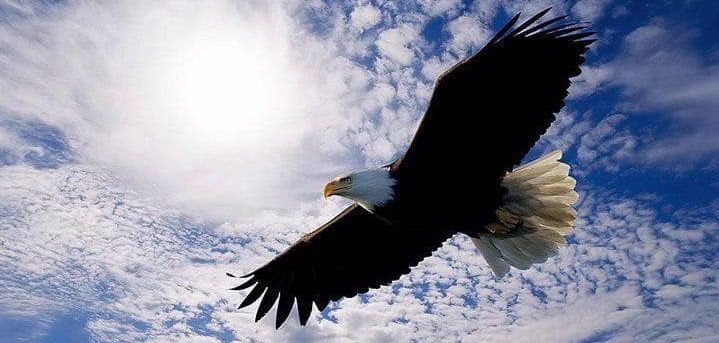
A few witnesses reportedly compared the creature to an enormous eagle. Others described a dark silhouette with wings that appeared to stretch wider than a car. Some believed it was flying low enough for them to appreciate the size of its body as it passed over houses, roads, agricultural fields, and open stretches of countryside.
For a brief moment, an otherwise familiar landscape seemed to contain something extraordinary.
People reached for their phones, hoping to capture evidence of what they were seeing. But photographing a distant object against a bright sky is rarely as simple as it sounds. By the time cameras were pointed upward, the mysterious shape had become little more than a tiny mark moving across the screen.
The opportunity to capture a clear image disappeared almost as quickly as the bird itself.
And when the creature was gone, the questions remained.
What had people actually seen? Could it have been an unusually large member of a familiar species? Had distance and sunlight distorted its apparent size? Or had something rarer passed over the Rio Grande Valley, leaving witnesses with only a few uncertain memories?
The reports, as described in the story, did not provide enough evidence to establish a definitive answer. Yet the idea of a gigantic bird appearing over South Texas was compelling enough to attract attention and inspire speculation.
The most intriguing part was not simply the creature’s reported size. It was the combination of a fleeting encounter, an enormous-looking silhouette, and the absence of convincing evidence afterward.
Something appeared to cross the sky.
People looked up.
And then it was gone.

The Shadow That Stayed in People’s Memories
Long after the sighting had ended, the shadow seemed to remain one of the most memorable parts of the experience.
Imagine standing in your yard on a warm afternoon. The roads nearby are quiet, the fields stretch toward the horizon, and the sunlight falls across the familiar outlines of fences, trees, and buildings. Nothing suggests that anything unusual is about to happen.
Then the light seems to change.
A dark shape moves across the ground, and you instinctively look upward.
High above you, or perhaps closer than you initially realize, a large silhouette glides through the sky. Its wings appear fully extended. It does not seem to struggle against the air, and there may be no obvious sound to accompany its movement.
You have only a few seconds to understand what you are seeing.
Is it an eagle? A vulture? A pelican? Something else entirely?
The absence of clear details makes the experience even more disorienting. Against a bright background, the bird’s coloring and feather patterns may be almost impossible to distinguish. Its body becomes a dark outline, and the outline is all you have to work with.
For some observers, that outline may have appeared astonishingly large.
A bird that seems ordinary from a distance can look much more imposing when viewed directly from below. Broad wings, an extended tail, and a gliding posture can combine to create a shape that appears almost unfamiliar.
The mind tries to make sense of the image, drawing on whatever comparisons seem appropriate. Someone might think of an eagle. Another person might compare it to a prehistoric creature. Someone else might simply describe it as the largest bird they had ever seen.
These comparisons do not necessarily mean that the observers saw different things. They may reflect different attempts to interpret the same uncertain visual information.
What remains especially difficult to determine is whether the bird itself was genuinely exceptional or whether the viewing conditions made it appear that way.
That distinction would become central to the mystery.
When an Ordinary Afternoon Turns Into an Unusual Encounter
The Rio Grande Valley is not an isolated wilderness where unfamiliar animals would be entirely unexpected. It is a populated region of southern Texas with towns, neighborhoods, agricultural areas, wetlands, and extensive open countryside.
Residents regularly encounter wildlife, including birds moving between feeding grounds, resting places, and seasonal habitats. For many people, seeing a bird overhead is part of everyday life.
That familiarity may be precisely what made the reported encounter so striking.
People who frequently see birds develop a general sense of what looks normal. They recognize the silhouettes of common species, the way certain birds hold their wings, and the difference between a small bird beating its wings rapidly and a large bird soaring with minimal movement.
When something appears to fall outside those expectations, even briefly, it can attract immediate attention.
A familiar bird seen in an unfamiliar way may be enough to create that reaction. A large bird flying closer than expected, a species rarely encountered by a particular observer, or an animal seen against an unusual background can all appear surprising.
But the initial impression can also be difficult to evaluate afterward.
A witness may remember the bird as enormous without remembering its precise shape. Another may recall the shadow but not the direction in which the wings were held. Someone who saw the animal while driving may have had only a brief glance before traffic, buildings, or trees obstructed the view.
The experience can be vivid while the details remain incomplete.
That is one reason unusual wildlife reports often become difficult to investigate. The strongest memory may be the feeling of seeing something extraordinary, while the information needed to identify the animal accurately is missing.
Why the First Reports Were Easy to Question
A report of a gigantic bird naturally invites skepticism, particularly when the description includes a wingspan wider than a car.
People frequently misjudge the size of objects in the sky. Unlike objects viewed on the ground, flying animals rarely have a convenient scale reference beside them. A bird may appear close when it is actually distant, or appear larger because its wings are fully extended against an empty background.
The problem becomes more complicated when the observer does not know the animal’s altitude.
A bird flying relatively close overhead can look enormous. The same bird viewed from several hundred feet away may appear much smaller. Without knowing the distance, it is difficult to estimate its actual dimensions from appearance alone.
Even experienced observers can make mistakes when a sighting is brief or conditions are poor.
Perspective, distance, contrast, and expectation all influence what a person sees.
None of these possibilities proves that the reported bird was ordinary. They simply provide reasonable explanations that should be considered before concluding that an exceptionally large or unknown animal was present.
A careful investigation would begin with the most basic question: what observable details can be established independently of the dramatic interpretation?
Was there a clear image? Could the bird’s wing shape be examined? Did witnesses describe distinctive markings? Was there a reliable estimate of its distance? Were the reports recorded separately before the witnesses discussed them with one another?
Without those details, the story remains intriguing but unresolved.
The Rio Grande Valley: A Landscape Built for Surprising Bird Sightings
The Rio Grande Valley offers a rich variety of habitats that attract birds throughout the year. Wetlands, river corridors, agricultural land, brush country, coastal environments, and open fields create opportunities for many different species to feed, rest, and move through the region.
The area is also important to birdwatchers because its location supports seasonal movement and a diverse range of wildlife.
Large birds can be especially striking in such an environment.
Turkey vultures often glide with their wings held outward, using rising air currents to travel with relatively little effort. Their broad silhouettes can look imposing from below, particularly when they are circling or passing overhead.
Pelicans have substantial bodies and long wings, and their flight can appear surprisingly graceful despite their size. Large herons and cranes can also look dramatic against an open sky. Raptors, meanwhile, may appear much bigger than expected when their wings are fully spread and their bodies are viewed from an unusual angle.
The exact identity of the reported bird cannot be established from the descriptions alone. Nevertheless, the region’s birdlife provides a sensible starting point for investigating the sighting.
It is possible that observers encountered a familiar species under unusual circumstances. It is also possible that they saw a less familiar visitor or an unusually large individual of a known species.
What cannot responsibly be concluded is that the animal represented an unknown giant bird simply because witnesses believed it looked enormous.
A striking silhouette is a reason to investigate, not a substitute for identification.
How a Large Bird Can Become a Giant in the Retelling
As an unusual story circulates, the language used to describe it can change.
An initial account might say that someone saw a very large bird. Another person hears the story and describes the animal as enormous. A third repeats the account and adds a comparison to an eagle with extraordinary wings.
Eventually, the most dramatic version may become the one people remember.
This process does not necessarily involve deliberate exaggeration. Human memory is reconstructive rather than perfectly photographic. People do not store every detail of an experience and replay it exactly as it happened. Instead, they remember selected elements and reconstruct the event when they think or talk about it later.
Conversations can influence that reconstruction.
If one witness suggests that the bird had a wingspan of ten feet, another person who was uncertain about the measurement may begin to remember the same estimate. A description that initially seemed tentative can become more definite after repeated discussion.
Details may become more vivid even when no new evidence has appeared.
This does not mean every report is false or that the witnesses imagined the entire event. It means that the details surrounding a surprising experience should be evaluated carefully.
The basic observation and the explanation attached to it are two different things.
A person may genuinely have seen a large bird pass overhead. That same person may sincerely believe it was far larger than any familiar species. Both statements can reflect an honest account of the experience, even if the second conclusion is inaccurate.
Separating those two elements is essential if the mystery is ever to be resolved.
The Smartphone Problem: Why No Clear Photograph Emerged
In the modern world, an unusual sighting often produces an immediate reaction: someone reaches for a phone.
Smartphones have made it easier than ever to document unexpected events. Yet they can also create a false sense that every remarkable sight should be easy to capture.
A distant bird against a bright sky presents several technical challenges.
The animal may occupy only a tiny portion of the frame. The camera may struggle to maintain focus, and automatic exposure settings may preserve the brightness of the sky while leaving the bird nearly black. Digital zoom can enlarge the subject, but it cannot reliably restore details that were never captured in the first place.
Movement makes the task harder. A bird can change direction, rise above a rooftop, pass behind a tree, or disappear into the distance before the camera is ready.
A person watching an unexpected event also has to divide their attention between observing the animal and operating the device. In that situation, the resulting footage may be much less useful than the observer expected.
The reports described in this story refer to photographs that offered little more than distant shapes or specks. If those images lacked identifiable markings, a clear outline, or a reliable reference point, they would have limited scientific value.
A photograph can demonstrate that something was present without establishing exactly what it was.
To identify a bird, experts generally look for characteristics such as the shape of the wings, the proportions of the body, the tail, the head, the flight pattern, and visible plumage. Even a relatively distant image can be useful if enough of those features remain visible.
A featureless silhouette, however, leaves much more room for interpretation.
The absence of a clear image does not prove that the encounter never occurred. It simply means the photographic evidence, as described, cannot settle the question.
What Wildlife Specialists Would Want to Know
A serious investigation would begin by collecting specific details from each witness, ideally before the accounts influenced one another.
Investigators would want to establish the time and location of each observation. They would ask which direction the bird was traveling, how long it remained visible, and whether the observer had a clear view or only a brief glimpse.
The bird’s behavior would also matter.
Did it flap its wings frequently, or did it glide for long stretches? Were the wings broad and rounded, narrow and pointed, or somewhere in between? Did the tail appear long or short? Was the body bulky, slender, or difficult to distinguish?
Color could provide another clue, although it would have to be interpreted cautiously if the bird was backlit.
Investigators would also ask whether the animal was alone, whether other birds were nearby, and whether the observer noticed any distinctive markings. They would look for buildings, vehicles, trees, or other objects that might help establish a rough scale.
Independent accounts can help investigators identify recurring features. However, similar descriptions alone do not establish that every witness saw the same individual or even the same species.
Several large birds might have been observed at different times. Alternatively, one unusual sighting could have inspired later reports that were interpreted through the same expectation.
Without a verified timeline and supporting evidence, those possibilities remain open.
The Ten-Foot Wingspan Claim
Among the most dramatic descriptions associated with the story is the suggestion that the bird’s wings may have stretched nearly ten feet.
Such a measurement would be extraordinary for many familiar birds, which is precisely why the claim requires careful examination.
The central difficulty is that a person looking upward cannot reliably calculate wingspan without information about distance, angle, or scale.
Consider a bird passing overhead. If it is much closer than expected, its wings may appear exceptionally broad. If it is farther away, the same wings will occupy a smaller portion of the observer’s field of view.
The observer may have no way to distinguish those possibilities in the moment.
A comparison with a car does not automatically solve the problem. The car and the bird may be at completely different distances, and the observer may not be able to compare their apparent sizes accurately. A bird seen against a vehicle on the ground can still be difficult to measure if the positions and angles are unknown.
Reliable measurements require a stronger basis.
A clear photograph with useful reference points, carefully documented observations, or physical evidence could help establish the animal’s actual dimensions. Without those things, the reported wingspan should be treated as an estimate rather than a confirmed measurement.
That distinction may sound small, but it is fundamental.
A witness’s impression can tell us that the bird looked unusually large. It cannot, by itself, establish that the animal possessed a particular wingspan.
Could Heat and Sunlight Have Changed What People Saw?
Environmental conditions can influence the appearance of distant objects, particularly in warm regions where heat rising from the ground may create visible distortion.
Heat shimmer can blur outlines and make distant shapes appear to waver. Haze can reduce contrast, while strong sunlight can conceal details. When a bird is silhouetted against a bright sky, its plumage may become invisible, leaving only the broad outline of its body and wings.
The effect can be surprisingly dramatic.
A bird with distinctive markings may appear completely black. The angle of its wings may make its body seem wider or narrower. If it banks during flight, its silhouette can change quickly, creating the impression that its proportions have shifted.
These visual effects do not necessarily explain the entire report. There is no verified information in the account that establishes the exact weather or lighting conditions at the time of the sighting.
Nevertheless, they illustrate why a distant animal can appear unfamiliar even when it belongs to a well-known species.
The human visual system is highly effective at recognizing objects under ordinary conditions, but it does not provide a perfect measurement instrument. When the image is incomplete, the brain fills in missing information using context, experience, and expectation.
That process is useful in daily life. It can also lead to mistaken judgments when an unexpected object appears in the sky.
Several Familiar Species Deserve Consideration
The reported descriptions are not sufficient to identify a particular species, but several broad possibilities would naturally be considered.
Turkey vultures are common soaring birds in many parts of the southern United States. Their broad wings and effortless gliding can make them look unusually large, especially when seen from below. Their flight often involves long periods without obvious wingbeats, a feature that might contribute to the impression of a creature moving silently through the sky.
Other large soaring birds could also be considered, depending on the precise location, season, and details of the observation.
Pelicans have large wings and substantial bodies. Their silhouettes can be striking when they pass overhead, especially if an observer is unfamiliar with their proportions. Large raptors can create a similar impression when viewed at close range or under unusual lighting.
A rare visitor or an unusually large individual of a familiar species would also be worth considering if credible details supported that possibility.
However, there is a limit to what can be inferred from a general description of a dark, broad-winged bird. Many species can produce similar silhouettes when their markings are obscured.
Naming one species as the definite explanation would go beyond the available information.
The responsible conclusion is that familiar birds provide plausible possibilities, but the reports do not establish which, if any, of them were involved.
Why Some Witnesses May Have Remained Convinced
For someone who believes they saw the creature, skeptical explanations may feel unsatisfying.
The memory may be unusually vivid. The bird appeared enormous. Its movement seemed effortless. The shadow crossed the ground, and the entire encounter lasted only a short time.
The emotional impact can remain even when the details are uncertain.
Unexpected experiences often become more memorable than routine events. People may remember exactly where they were standing, who was nearby, or what they were doing when something unusual happened. The event becomes a reference point in their personal history.
That sense of certainty, however, is not the same as certainty about the animal’s identity.
A person can be confident that they saw something without being able to determine its actual size or species. Confidence reflects how strongly the experience is remembered; it does not guarantee that every interpretation is accurate.
This distinction is important because dismissing an entire account as a lie is unnecessary.
The witness may be entirely sincere. The sighting may have happened much as described. The uncertainty lies in the explanation, not necessarily in the basic observation.
A careful response can acknowledge the experience while still asking whether the evidence supports the more extraordinary claims.
The Search for Physical Evidence
As interest in an unusual animal grows, the next question is usually whether anything can be found to support the reports.
Could someone locate a nest? Were feathers discovered? Had an injured bird been reported? Was there a clear video taken from another angle? Could wildlife officials identify a species matching the description?
These are the kinds of questions that could help move a story beyond speculation.
That absence limits what can be said.
It does not prove that no large bird was seen. It does not demonstrate that every witness was mistaken. It means only that the available information does not establish the identity of the animal.
The difference matters because extraordinary explanations often become more popular when ordinary evidence is missing.
A lack of identification can create a sense of mystery, but it cannot be treated as proof of an extraordinary creature. If investigators cannot identify an object, the accurate conclusion is that it remains unidentified—not that it must belong to an unknown species.
The mystery may persist because the evidence is insufficient, rather than because the explanation is beyond science.
Could It Have Been a Rare Visitor?
The possibility of an unusual bird passing through South Texas is entirely reasonable in general terms.
Birds travel long distances, and migration can bring species into places where observers do not regularly encounter them. Weather, food availability, age, and individual behavior can influence where a bird appears.
Even experienced birdwatchers sometimes encounter animals that are unexpected for a particular location or season.
A rare visitor could explain why the bird attracted so much attention without requiring it to be a previously unknown species. An unusually large individual could also look striking to observers who were accustomed to seeing smaller examples of the same type of bird.
But a rare-bird explanation still needs evidence.
The animal’s shape, flight behavior, markings, and other characteristics would need to be compared with known species. A useful photograph or sufficiently detailed independent observations could narrow the possibilities considerably.
Without those details, the idea of a rare visitor remains plausible but unconfirmed.
The fact that an explanation is possible does not make it established. It simply gives investigators another avenue to examine.
What About the Possibility of an Unknown Giant Bird?
For some people, the most exciting explanation is that the creature belonged to a species that has not yet been documented.
The idea is easy to understand. A bird that appears larger than anything familiar seems to invite a more extraordinary explanation, especially when no clear image exists to settle the debate.
But a genuinely unknown giant bird would raise important biological questions.
Where would it live? What would it eat? How would it reproduce? Where would it nest? How would an animal of such exceptional size sustain flight? Why would it remain undocumented despite the presence of roads, settlements, wildlife observers, and modern recording technology?
Researchers would also look for physical evidence, including feathers, remains, nests, eggs, photographs, or genetic material.
A new species does not need to be discovered through every one of these methods, but a claim involving an extraordinarily large flying animal would require convincing evidence that could be independently examined.
The reports described here do not provide that evidence.
It is possible to imagine an unknown animal, but imagination alone cannot establish its existence. Until verifiable information emerges, the unknown-species explanation remains speculative and should not be treated as more likely than ordinary explanations involving known birds and difficult viewing conditions.
How a Local Sighting Can Become a Lasting Mystery
Once a surprising story begins circulating, its life can extend far beyond the original event.
People share descriptions with neighbors. Someone posts a photograph. Others compare the story with something they once saw. A detail that was initially uncertain becomes a central feature of the narrative.
As the story spreads, the mystery may become more compelling than the evidence itself.
The Rio Grande Valley provides a memorable setting for such a tale: wide skies, open fields, rural roads, and a rich variety of wildlife. The image of a vast shadow passing silently above that landscape is easy to imagine.
It is also easy to understand why the story would attract people who enjoy unexplained animal sightings.
Modern technology has not eliminated this fascination. If anything, the expectation that every unusual event should be documented can make the absence of clear evidence seem even more intriguing.
When a phone fails to capture a convincing image, the missing photograph becomes part of the story. When no identification follows, uncertainty gives people room to propose explanations.
Some may imagine a rare bird. Others may suspect an optical illusion. Still others may wonder whether the sighting involved something entirely unknown.
The story continues because the central question has not been answered.
But continued interest is not evidence of the creature’s extraordinary nature. It is evidence that an unresolved story can capture the imagination.
What the Sighting Can Teach Us About Human Perception
The mystery also illustrates something important about how people interpret the world.
We often assume that seeing an object directly means understanding what it is. In reality, observation and interpretation are separate processes.
The eyes receive visual information. The brain then organizes that information into a meaningful picture, using previous experience to fill in gaps.
Most of the time, this happens so quickly that we are unaware of the distinction.
When we see a familiar bird at a familiar distance, recognition feels immediate and reliable. When the bird is distant, poorly lit, or unexpectedly large-looking, the process becomes less certain.
The brain still tries to identify it.
It may select the closest familiar category, such as an eagle. It may interpret the apparent scale as evidence that the animal is extraordinary. And after the event, discussion with other people may influence how the experience is remembered.
None of this makes human perception useless. It simply means that visual impressions should be treated with appropriate caution when they concern unusual or extraordinary claims.
Scientists use independent observations, measurements, repeatable methods, and physical evidence precisely because individual impressions can be misleading.
A witness’s account is valuable information. It is often the starting point of an investigation. But the strongest conclusions emerge when observations can be checked against evidence that does not depend solely on memory.

Is Your Bedtime Habit Secretly Affecting…050

@Men who suck their wife’s V@G¥N@ are more…see more@

Timeless Icons: Jennifer Lopez and Shakira’s Bold Redefinition of Age and Power in 2025
About The Author
