
BREAKING NEWS: An Unexpected Development Has Captured Everyone’s Attentio
An unexpected update has sparked questions online. Here is why the facts matter more than the headline.
Meta description: A sudden breaking-news announcement has sparked curiosity, but what is known, what remains unclear, and why should readers wait for verified details?
A quiet stretch of road. A brief announcement. Then a headline declaring that something unexpected has happened—and that everyone is talking about it. Sometimes, that is all it takes for a developing story to spread rapidly across social media and news platforms.
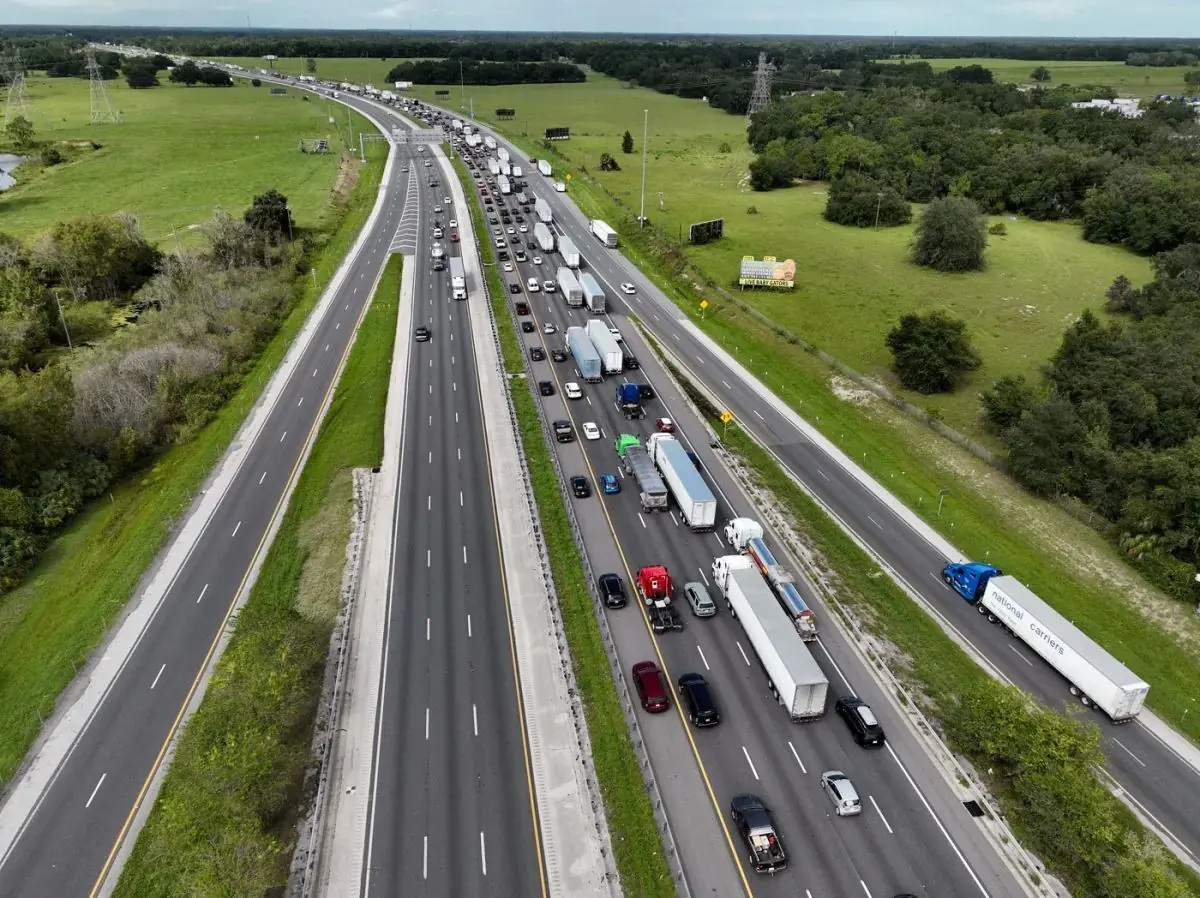
The image accompanying this headline offers very little information: a small view of a roadway, followed by the words, “BREAKING NEWS: Just Minutes Ago, An Unexpected Development Has Captured Everyone’s Attention.” There is no visible location, no identifiable vehicle, no named person, no date or time of an incident, and no explanation of what supposedly happened.
That absence of detail is important. A dramatic headline can make readers feel that they are about to discover an urgent event, but the headline alone does not establish that an accident occurred, that a road was closed, that anyone was injured, or that authorities issued an emergency warning. The photograph does not prove any of those things either.
So what is the real story behind a headline like this? The most responsible way to approach it is to examine why unexpected developments attract immediate attention, how early reports should be understood, what information is needed before an event can be described as confirmed, and why a few minutes of patience can make a major difference.
The first reaction may be curiosity. The next should be a closer look at the evidence. And as the following sections explain, the difference between those two responses can determine whether readers understand a developing story—or become part of the confusion surrounding it.
1. A headline that raises questions before it provides answers
The phrase “just in five minutes ago” is designed to create urgency. It suggests that an important event has happened moments before the reader opened the page. The words “unexpected development” add another layer of suspense, encouraging people to wonder whether the news involves a serious road incident, a public safety issue, a sudden announcement or something that could affect an entire community.
But the screenshot does not tell us which of those possibilities is true. It shows only a small section of roadway and a broad headline. There is no confirmed report identifying the road, the country, the people involved or the nature of the event. The article text visible in the screenshot is also generic: it discusses how breaking stories attract attention and how early information can be incomplete, rather than describing a particular incident.
That distinction is essential. It would be misleading to turn the small road photograph into a report of a crash, a road collapse or an emergency response without evidence. A responsible article can still explore why a sudden road-related development attracts attention, what readers should look for in a developing report and how to distinguish confirmed information from speculation.
The first question, therefore, is not simply “What happened?” It is “What can actually be established from the information available?” That question leads to a much clearer understanding of the headline—and of why the public should be careful when a story is presented as breaking news.
2. Why “just five minutes ago” makes a story feel urgent
The expression “just five minutes ago” is one of the strongest attention-grabbing phrases in online news headlines. It gives the impression that the information is exceptionally fresh and that readers may be among the first people to discover it.
That feeling can be powerful. When people believe an event has happened only moments earlier, they often want to know what happened before anyone else. They may open the article immediately, share it with friends or return to the page repeatedly to look for updates.
There is nothing inherently wrong with reporting information quickly. In an emergency, timely information can help people avoid danger, understand road closures or follow instructions from authorities. A developing story can also be important because events sometimes change rapidly and early public awareness may be useful.
The problem begins when the urgency of the wording is greater than the amount of information actually available.
A headline that says “just five minutes ago” should ideally be accompanied by a clear publication time, a named location and an explanation of what has been confirmed. Without those details, the phrase can create the appearance of a live report without giving readers the information they need to evaluate it.
For example, a genuine traffic alert would normally identify the road or route involved, explain whether traffic is affected and indicate which authority has issued the information. A report about a public announcement would identify the organization or person responsible. A report about a serious incident would distinguish between what emergency services have confirmed and what witnesses have reported.
The screenshot does none of those things. Its headline creates suspense, but the visible text does not identify the event. The small photograph of a road does not fill that gap.
This is why readers should look beyond the first line. A dramatic phrase is not evidence. A timestamp is not proof that the event has been independently verified. And a photograph of a road does not establish that a particular incident took place there.
The most useful question is simple: what new information does the article actually provide?
If the answer is unclear, the story may be a general attention-grabbing post rather than a complete news report. Readers can still be curious, but they should avoid treating the headline as confirmation of an event.
3. What the road photograph can—and cannot—tell us
The photograph in the supplied screenshot is very small. It appears to show a section of roadway, lane markings and a barrier or raised edge along one side. There is no clearly identifiable vehicle, emergency vehicle, damaged structure, visible crowd or recognizable landmark.
Even if the image is genuine, its meaning is limited.
A road photograph can be used in many different contexts. It might illustrate a traffic update, a transport announcement, an infrastructure project, a road-safety discussion or a story about an incident. The same type of image could appear in a report about a highway closure or in an article explaining how traffic monitoring works.
The difficulty is that the photograph alone cannot tell readers which interpretation is correct.
There are several important details missing from the image:
- Location: No road name, town, city or country is visible.
- Time: The photograph does not establish when it was taken.
- Direction: It is not clear which direction traffic is moving or which route is shown.
- Event: No identifiable incident is visible.
- People involved: No person or vehicle can be identified as being connected to a particular event.
- Official information: There is no visible statement from police, transport authorities or emergency services.
Those gaps matter because photographs are often shared outside their original context. An image taken months or years earlier can be reposted alongside a new headline. A picture from one country can be used to illustrate a story from another. A photograph of an ordinary road can be placed beneath a dramatic caption even when it has no direct connection to the subject.
This does not automatically mean that the image is false. It means that the image should not be asked to prove more than it can.
A responsible report would identify the photograph’s source and explain whether it shows the actual location or is merely illustrative. If the image is a general road photograph, it should be described as such. If it is connected to a verified incident, the report should provide enough information for readers to understand that connection.
Without those details, the safest interpretation is that the picture shows a roadway and nothing more.
That may seem less dramatic than the headline, but accuracy is more valuable than an exciting guess.
4. How a developing story becomes a confirmed report
A developing story usually begins with an initial piece of information. It may come from a witness, a public announcement, an emergency call, a local authority or a journalist who notices an unusual event.
At the beginning, that information may be incomplete. A witness might know that traffic has stopped but not understand why. A driver may see emergency vehicles but not know whether anyone has been injured. A person nearby may hear a loud noise without seeing what caused it.
Journalists then have to establish what happened.
The first stage is identifying the basic facts: what, where and when. These details may sound simple, but they are essential. Without a location, it can be difficult to contact the relevant authorities. Without a reliable time, it may be impossible to distinguish a current event from an older incident. Without a clear description, different reports may accidentally refer to separate events.
The next stage involves checking the information with reliable sources. Depending on the subject, that may mean contacting police, fire services, ambulance services, transport authorities, local government offices or the organization involved in an announcement.
ournalists may also speak to witnesses. Their accounts can provide useful details about what they saw and heard, but witness statements need to be handled carefully. People can misunderstand events, see only part of a scene or remember details differently under stress.
Photographs and videos can help establish a sequence of events, but they also need verification. A video may be genuine while its caption is incorrect. A photograph may show a real incident but have been taken in a different location. A short clip may omit the moments before or after the most dramatic scene.
The final stage is bringing the information together into a report that distinguishes confirmed facts from unresolved questions.
This process takes time. A reliable report may initially contain fewer details than a viral post, but that does not make it less useful. In fact, a short report that accurately states what is known can be much more valuable than a long account filled with unsupported claims.
The screenshot’s visible text refers to precisely this problem: early reports may contain limited information while journalists gather details, contact witnesses and check official statements. That is a reasonable description of how developing news should be handled.
The important point is that a developing story should become clearer as evidence is gathered. It should not become more dramatic simply because readers are waiting for an update.
5. Why social media can make an unclear story spread so quickly
Social media has changed the way people encounter breaking news. In the past, many readers learned about major events through television bulletins, radio reports or newspaper updates. Today, a headline may appear in a feed before a traditional news organization has published a detailed account.
That speed has advantages. People can share warnings, find eyewitness information and communicate with relatives during emergencies. A local community can quickly draw attention to a blocked road, severe weather or a missing person.
But the same speed can also spread confusion.
A person may share a headline without opening the article. Another user may copy the headline and add a more dramatic description. Someone else may repost an image with a claim that was never part of the original report. Within a short time, several versions of the same story may circulate, each containing slightly different details.
Readers can then struggle to determine which version is accurate.
This is particularly common when a post uses broad phrases such as “unexpected development,” “everyone is talking about it” or “more details are coming.” These expressions leave room for people to imagine what happened. They can encourage comments and sharing even when the central event has not been explained.
The screenshot includes sharing buttons for Facebook, Twitter and Pinterest. Those buttons are ordinary features of online publishing, but they also illustrate how easily a headline can travel beyond the page where it first appeared.
Once shared, the headline may be separated from its original context. People who encounter it later may not see the article’s limitations. They may assume that the event has been confirmed because the same wording appears in multiple posts.
Repetition, however, is not verification.
If ten accounts repeat the same unconfirmed claim, that does not create ten independent sources. They may all be copying one original post. A reliable assessment requires independent confirmation, not simply a large number of reposts.
Readers can help reduce confusion by checking the date, looking for the original publisher and avoiding the addition of details that are not supported. If a post contains no clear location or source, it is better to ask for clarification than to fill in the missing information.
The goal should not be to stop people from sharing important news. It should be to make sure that what they share is useful and accurate.
6. The difference between a traffic disruption and a serious emergency
Because the screenshot includes a road photograph, some readers may naturally wonder whether the unexpected development involves a traffic incident. That is one possible subject for a road-related news story, but the image does not establish that it does.
It is nevertheless useful to understand why road developments can attract immediate public attention.
Roads connect workplaces, schools, hospitals, homes and commercial areas. A disruption on an important route can affect thousands of journeys. Even a relatively small incident may cause delays if it occurs at a busy intersection or on a highway with limited alternative routes.
A traffic disruption can have several causes. There may be road maintenance, a broken-down vehicle, a temporary traffic-control measure, an event, severe weather or a collision. Some disruptions are planned and announced in advance. Others happen unexpectedly and require an immediate response.
A serious emergency is different. It may involve injuries, a dangerous obstruction, a hazardous spill or damage to infrastructure. In those situations, emergency services may need to secure the area, assist people and prevent further harm.
The distinction is important because not every traffic slowdown is an emergency, and not every emergency results in a long road closure.
A responsible report should explain the nature of the disruption rather than using vague language that makes every event sound equally serious. If a route is closed for routine maintenance, that should be stated clearly. If emergency crews are responding to a collision, the report should identify what authorities have confirmed. If the cause is not yet known, it should say so.
Readers should also understand that early descriptions can change. A road may initially be closed because officials need to inspect a possible hazard. After inspection, the route may reopen without a major incident being confirmed. Alternatively, a seemingly minor obstruction may turn out to require a more extensive response.
The facts should guide the headline, not the other way around.
7. What happens when authorities receive an urgent road report
When authorities receive a report of a possible road emergency, their first priority is generally to understand the immediate risk and determine what response is required.
The response will depend on the information available. A report of a vehicle blocking a lane may require a different response from a report of a collision involving injuries or a dangerous substance.
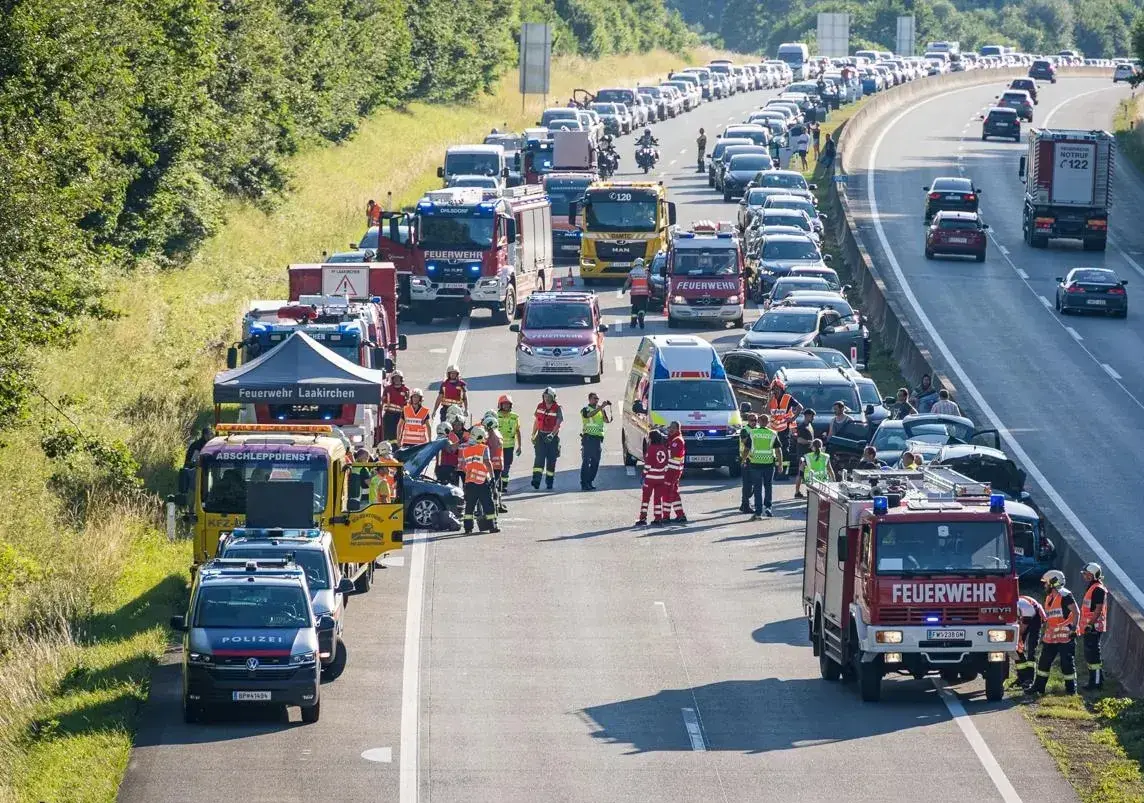
The first people arriving at a scene may need to establish whether anyone requires medical attention, whether traffic needs to be stopped and whether the area presents an ongoing danger. They may also need to prevent additional vehicles from entering a hazardous section of road.
Traffic control is an important part of this process. If drivers continue approaching an incident at normal speed, they may create further danger for people already at the scene. Temporary barriers, cones, signs or police vehicles may be used to direct traffic away from the affected area.
Emergency responders also need space to work. Ambulances, fire engines and rescue vehicles may require access to the scene, and unnecessary vehicles or spectators can make that access more difficult.
Once the immediate danger has been managed, officials may begin gathering information about what happened. Depending on the circumstances, this can involve examining vehicles, road surfaces, barriers, traffic signals or nearby infrastructure.
Witnesses may be asked to provide accounts. Camera footage may be reviewed where available. Investigators may compare different accounts to establish a reliable timeline.
The public may receive updates during this process, particularly if a road closure affects a large area. However, authorities may avoid releasing details that have not been confirmed or that could interfere with an investigation.
This can be frustrating for people waiting for information, especially when social media is already full of speculation. But there is a reason for caution. Incorrect information can cause unnecessary alarm, lead drivers towards unsafe routes or unfairly blame people before the facts are known.
A short, accurate update is preferable to a detailed but unreliable explanation.
8. Why the location matters more than a dramatic description
One of the most useful details in any breaking-news report is the location.
If an event involves a road, the location tells drivers whether they may be affected. It helps emergency services coordinate their response and allows local residents to understand whether a disruption is close to their homes or workplaces.
A useful traffic report should ideally include the road name, the affected section, the direction of travel and any known alternative routes. If a closure is partial rather than complete, that distinction should be made clear.
For a developing incident, even a nearby landmark can help readers understand the area. A report might identify a junction, bridge, tunnel or exit number. The information should be specific enough to be useful without exposing private details that are not relevant to public safety.
The screenshot provides none of this information. It does not identify a country or city. The road could be a local street, a major highway or a small section of a larger transport network.
This makes it impossible to tell whether the headline refers to a local event or a wider development.
A headline may still be updated as more information becomes available. If the original report was published before the location was confirmed, the publisher should make that limitation clear and revise the article when reliable details emerge.
Readers should be cautious when a post claims that a road is closed but does not name the road. They should also avoid assuming that a photograph shows a location familiar to them simply because the road markings look similar.

If your partner always asks you to do it from behind, it’s because he… See more

Just 2 ingredients to get rid of belly fat, recipe here… see more
BREAKING NEWS A major storm is forming… See more
About The Author
