
Just in: a plane carrying over 100 passengers has crashed in… See more

Chapter 1
Tomblaine Plane Crash: Smoke Inside the Cabin, the Final Flight and the Questions Behind the Tragedy
A warning of smoke, a sudden engine change and a devastating loss of control: the preliminary findings reveal how quickly the final flight unfolded.
It began as another routine skydiving flight from Nancy-Essey Airport in northeastern France. The Pilatus PC-6 had already completed several trips that day, carrying instructors and passengers preparing to experience a parachute jump. The weather appeared favorable, the aircraft was within its permitted weight, and the pilot was highly experienced.
Then, during the take-off, someone inside the cabin noticed something alarming.
“There’s smoke!”
A second instructor soon raised the same concern, pointing toward the floor near the front-right section of the aircraft. The people on board had only moments to react. The side door was partially opened in an attempt to ventilate the cabin. Shortly afterward, the engine parameters changed, the aircraft’s nose rose, and the stall warning sounded.
Within seconds, the flight ended in disaster.
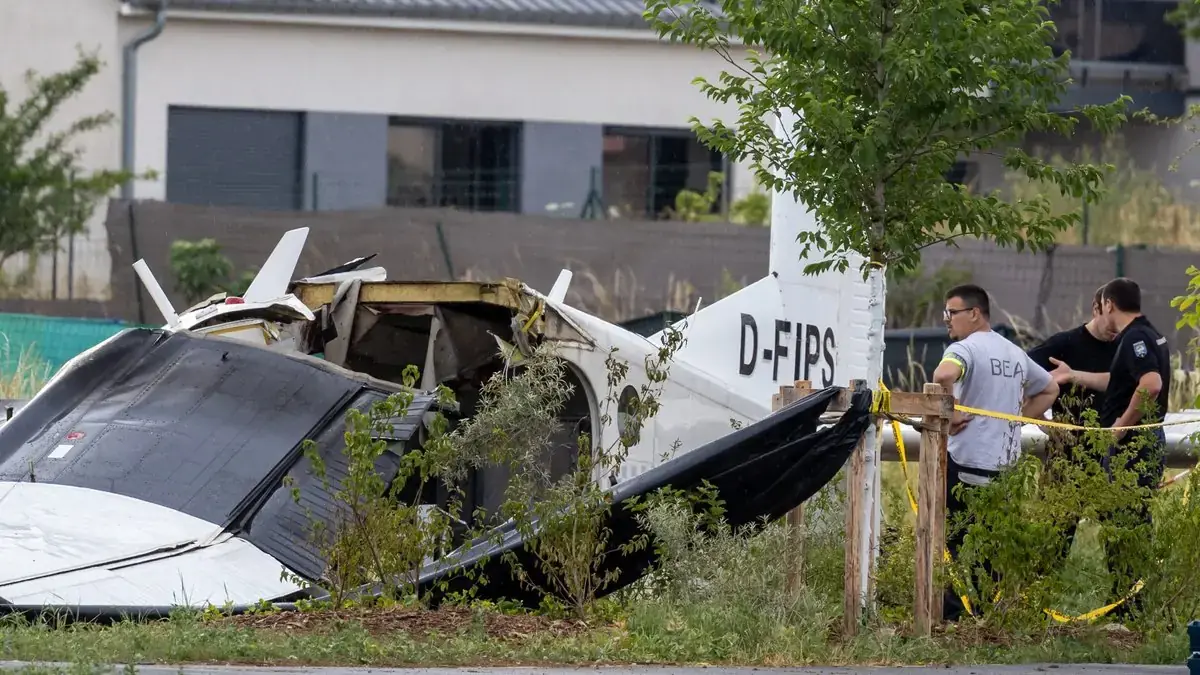
All 11 people aboard were killed when the aircraft crashed near Tomblaine on June 28, 2026. The victims included the pilot, five skydiving instructors and five people preparing for tandem parachute jumps. The tragedy shocked the local community and prompted a major investigation into what happened during the aircraft’s final moments.
The preliminary report published by France’s Bureau of Enquiry and Analysis for Civil Aviation Safety (BEA) has since provided a much clearer account of the sequence inside the aircraft. It describes the smoke warnings, the decision to open the side door slightly, a sudden reduction in engine gas-generator speed, changing propeller behavior, and a series of stall warnings before the aircraft lost control.
Yet the report does not provide a complete answer to the most important question: what caused the smoke, and what exactly led to the loss of control?
The pilot had approximately 10,500 flight hours. The aircraft’s take-off weight was below its maximum permitted limit. Weather conditions were favorable. Those details make the sequence especially difficult to understand at first glance.
But aviation accidents rarely have one simple explanation. A warning inside the cabin, a mechanical problem, a change in aircraft performance, and the actions taken under pressure may all need to be examined together.
To understand the tragedy, we must go back to the beginning of that flight—and then follow the evidence through the moments that changed everything.
Chapter 1: The Final Take-Off From Nancy-Essey Airport
The aircraft involved was a Pilatus PC-6/B2-H4 Turbo Porter registered as D-FIPS. It was being used for parachuting operations by Tandemotion Parachutisme, a company that organized commercial tandem skydiving experiences.

The PC-6 is a single-engine turboprop aircraft designed for operations that require strong short-field performance and the ability to carry people or equipment into demanding environments. Its high-wing configuration, fixed landing gear, and large cabin make it particularly suitable for parachuting activities.
On June 28, 2026, the aircraft was scheduled to carry out another local flight from Nancy-Essey Airport. The plan was familiar: take off, climb to the required altitude, allow the parachutists to jump, and return to the airfield for the next group.
The flight was not a long-distance journey. It was a specialized operation that depended on repeated take-offs and landings, with the aircraft returning to the same airport after each jump.
That routine is important because the aircraft had already completed several rotations before the fatal flight.
A sixth rotation of the day
According to the BEA preliminary report, the pilot lined up on runway 21 from taxiway B2 and prepared for the sixth rotation of the day. Ten parachutists were on board.
The aircraft had completed an earlier block of three rotations. The accident occurred during the third flight of the second block, meaning the aircraft had already made five trips before beginning the fatal one.
This was not an unusual kind of schedule for a parachuting operation. The aircraft had been used for repeated flights, and the operation was planned around groups of passengers and instructors.
The previous day, the pilot had completed 15 rotations with the same aircraft for Tandemotion Parachutisme. The company had planned another 15 rotations on June 28, although the schedule included a break during the hottest part of the afternoon because of the forecast high temperatures.
The fact that the aircraft had completed several flights earlier in the day does not, by itself, establish that fatigue or accumulated mechanical stress played a role. It does, however, make the maintenance history, operating schedule, fuel records, and technical condition of the aircraft important parts of the investigation.
The people on board
There were 11 people aboard: the pilot and ten parachutists.
The ten passengers included five instructors and five people who had come to experience tandem skydiving. Reports identified the five novice participants as nursing students. The flight was intended to provide them with a parachuting experience, not to transport them to another destination.
For those on board, the journey was supposed to be a short and exciting part of a planned activity. The passengers had prepared for a jump, while the instructors were responsible for helping ensure that the operation was carried out safely.
The aircraft’s cabin was arranged for parachuting. The occupants wore equipment associated with the activity, and the instructors were positioned in different parts of the cabin.
The preliminary report specifically refers to one instructor seated toward the rear and another seated in the middle. Their positions would become important because both independently reported seeing smoke in the forward-right area of the cabin.
The pilot’s experience
The pilot was 44 years old and held a commercial pilot licence. The BEA report recorded approximately 10,500 total flight hours, including around 4,000 hours on the Pilatus PC-6.
He had obtained his PC-6 qualification in 2015 and had maintained the relevant qualifications over the years. The report also states that he was employed by the company that owned the aircraft and flew the D-FIPS regularly.
Those details are important because they show that the aircraft was not being operated by an inexperienced person unfamiliar with the type.
However, experience cannot prevent every emergency. Even a highly experienced pilot may face a situation in which several warning signs appear within seconds, leaving little time to identify the cause and select the safest response.
A pilot’s total flight hours are only one part of an investigation. Investigators must also examine recent experience, time on the aircraft type, training, operating procedures, medical fitness, and the specific conditions of the flight.
The BEA report noted that the pilot’s logbook recorded a previous flight on June 8 and a previous PC-6 flight on May 10. It also cautioned that the logbook may not have been fully up to date. Witness accounts indicated that he had around 4,000 hours of experience on the PC-6 and had flown the aircraft regularly.
The report does not conclude that the pilot’s experience or qualifications caused the accident.
The aircraft’s weight was within the permitted limit
One early question after any aircraft accident is whether the plane was carrying too much weight or whether the distribution of passengers and equipment affected its balance.
The preliminary report addresses this issue directly.
Based on the actual weights collected during the investigation, the aircraft’s take-off mass was calculated at approximately 2,590 kilograms. The maximum permitted take-off mass was 2,800 kilograms.
That meant the aircraft was about 210 kilograms below its maximum permitted weight.
Investigators also calculated the centre of gravity at approximately 31.5 percent, taking into account the observed positions of the parachutists. This figure was within the manufacturer’s permitted range.
The report states that the aircraft’s mass and centre of gravity were within the required limits. It also says that no movement of the occupants was observed before the loss of control.
These findings are significant because they make an obvious weight or balance problem less likely as an explanation for the crash.
They do not eliminate every possible performance issue. An aircraft can be within its approved weight limits and still experience a mechanical malfunction, an engine problem, or a loss of control.
But the preliminary figures do not support the simple claim that the plane crashed because it was overloaded.
The weather on the morning of the accident
Weather conditions were another important part of the investigation.
At approximately 11 a.m., the airport’s weather observation recorded a wind from 260 degrees at around eight knots, with visibility and cloud conditions reported as CAVOK. The temperature was approximately 33 degrees Celsius, with a dew point of 18 degrees.
The meteorological data also showed that temperatures close to the ground were higher than the temperature measured in the sheltered observation area. At 10:59 a.m., the recorded temperature 10 centimetres above the ground was approximately 41.1 degrees Celsius.
The weather was therefore hot, even though visibility and the general flying conditions were favorable.
High temperatures can affect aircraft performance because warm air is less dense than cooler air. Lower air density can reduce the amount of oxygen available to an engine and can affect the aerodynamic performance of an aircraft.
That does not mean the heat caused this crash. The BEA report does not establish such a conclusion. It simply provides the environmental measurements that investigators must consider when reconstructing the aircraft’s performance.
The aircraft’s calculated take-off distances were also compared with the actual flight data. The report found that the theoretical distances were consistent with the distances recorded during the accident flight.
At first glance, the available information suggested that the aircraft had begun the take-off within normal operating conditions.
Then came the first warning from inside the cabin.
Chapter 2: “There’s Smoke!” — The First Warning Before the Crash
The most striking detail in the preliminary report is the moment when an instructor noticed something unusual inside the aircraft.
During the take-off rotation, as the aircraft was accelerating and preparing to leave the runway, an instructor seated toward the rear shouted that there was smoke.
He pointed toward the front-right area of the cabin.
The pilot did not appear to hear the warning and continued the take-off.
A second instructor, seated in the middle of the aircraft, then also shouted that there was smoke. He pointed toward the same general area, near the floor.
The two instructors agreed to partially open the side door to ventilate the cabin.
This sequence is central to the investigation because it establishes that more than one person reported a possible smoke problem before the aircraft lost control.
It also creates a difficult question: if smoke was present, why could investigators not see it in the available recordings?
Two separate warnings
The fact that two instructors independently reported smoke is important.
A single observation can sometimes be mistaken. Light reflecting from a surface, dust, vapor, or an unusual smell may be interpreted incorrectly in a stressful environment.
But when two people point toward the same general area and report the same problem, investigators must take the reports seriously.
The instructors were familiar with parachuting operations and the aircraft environment. Their warning was not a casual comment. It was an observation made during a critical stage of flight.
The BEA report records their words and actions but does not determine what substance or condition they were seeing.
The distinction is crucial. The preliminary report establishes that smoke was reported. It does not establish that investigators found visible smoke in the cabin or identified its source.
Why the side door was partially opened
The instructors agreed to open the side door slightly to ventilate the cabin.
From their perspective, the action was an attempt to improve the conditions inside the aircraft. If smoke was present, opening the door could help remove it or reduce its concentration.
However, opening an aircraft door during take-off or flight is not an ordinary action. The effect depends on the aircraft’s design, the door configuration, airflow, and the phase of flight.
The BEA report describes the decision but does not state that opening the door caused the accident.
It would therefore be inaccurate to claim that the instructors’ action was responsible for the crash. The investigators must establish the sequence of events and assess whether the door’s position had any measurable effect on the aircraft’s behavior.
This is one of the details that makes the preliminary findings so important: they reveal what happened, but they do not yet provide a complete explanation of why it happened.
The pilot may not have heard the first warning
According to the BEA, the pilot did not appear to hear the first instructor’s shout.
That wording should be treated carefully. It does not necessarily mean the pilot ignored the warning. The report describes what investigators could infer from the available evidence.
During take-off, pilots are dealing with engine power, aircraft speed, runway alignment, control inputs, and the transition from ground movement to flight. The cockpit environment can also be noisy.
A warning from the rear of a cabin may be difficult to hear, particularly if the aircraft is accelerating and the engine is operating at high power.
The second warning came from another part of the cabin, but the report does not provide evidence that the pilot had enough time to understand the situation and respond before the aircraft’s performance began to change.
The available sequence indicates that the aircraft continued its take-off and then experienced a significant reduction in engine gas-generator speed.
The engine parameters suddenly changed
Shortly after the smoke warnings, the gas-generator speed, identified in the report as Ng, decreased by approximately 10 percent.
At around the same time, the propeller speed, identified as Np, briefly fluctuated before returning to its nominal value of 2,000 revolutions per minute.
The change in Ng was particularly significant because the report states that the reduction had not occurred during the five preceding take-offs that investigators compared with the accident flight.
The BEA also states that the Ng value remained stable after the reduction until the end of the available recording.
At the time of the preliminary report, investigators had not determined whether the decrease was commanded or occurred because of a malfunction.
That distinction is important.
A commanded reduction would mean that the engine setting changed as a result of an input or control action. A reduction that was not commanded could indicate a mechanical, fuel-related, or other technical problem.
The preliminary report does not establish which explanation applies.
Understanding Ng and Np
The two engine parameters may sound highly technical, but they help explain why investigators are examining the aircraft’s engine so closely.
Ng refers to the speed of the gas generator within the turboprop engine. The gas generator is a central part of the engine’s operation, producing the hot gas flow that drives the turbine.
Np refers to the rotational speed of the propeller.
In a turboprop aircraft, the engine and propeller work together to produce thrust. A change in gas-generator speed may affect the engine’s ability to deliver power, while propeller speed provides another important indication of how the propulsion system is operating.
A brief fluctuation in propeller speed does not automatically identify the cause of a malfunction. It must be considered alongside other recorded parameters, physical examinations, and the engine’s condition.
The BEA’s preliminary findings show that the propulsion system experienced an unusual change during the take-off sequence. They do not yet identify the exact failure mechanism.
Why the smoke and engine changes matter together
The timing of the smoke warnings and the engine parameter changes is one of the most important aspects of the case.
The instructors reported smoke in the front-right area of the cabin. Soon afterward, the engine’s gas-generator speed fell by approximately 10 percent.
That sequence raises the possibility that the two events were connected.
For example, an issue in the engine compartment or a system near the forward cabin could potentially produce both a visible or perceived smoke condition and a change in engine performance.
But this remains a line of investigation, not a confirmed explanation.
The investigators need to determine where the reported smoke originated, whether it was actually smoke, and whether the engine’s performance change was caused by the same underlying problem.
The preliminary report specifically says that the origin of the reported smoke had not been established.
The mystery of the missing smoke in the recordings
One of the most puzzling findings is that none of the examined videos showed visible smoke escaping from the aircraft.
The BEA examined five GoPro cameras carried by the instructors. The recordings began during taxiing and continued through the take-off sequence until the loss of control. Some footage showed the cabin interior, while other sections showed the outside of the aircraft.
No visible smoke was identified in the recordings.
Investigators also obtained video from a witness on the ground, a surveillance camera, and a moving vehicle. Those recordings likewise did not show smoke coming from the aircraft.

Breaking Barriers on Hollywood’s Biggest Night
The Flight Was Routine Until a Massive Flock of Birds Began Chasing the Plane

If you have these two holes in your back, it means you don’t…See more
About The Author
